


Editors note: This was originally written for and published in Hurly Burly 2018. One way to support this and our other titles is by purchasing something from our store.
Words: Martin Whiteley
Photos: Sven Martin, Boris Beyer and Sebastian Schieck
The name of the series should really be the dead giveaway: it’s a World Cup and, therefore, we visit venues all over the world. Well, we used to a lot more.
There’ve been recent seasons where it’s looked more like a European Cup: six races in Europe plus Mont-Sainte-Anne (which is a little bit Euro, if you’ve ever been). So why aren’t we all over the world, racing in five continents every year? Like I see so often in the online comment sections, why don’t we go back to this race venue or another? It sounds so simple: just bring it to Whistler, Schladming, Colorado, my backyard, you name it! I’ll get to all that in a bit, but first I’ve been asked to reflect on some of the more interesting and exotic venues I’ve been to since the series started way back in 1993.
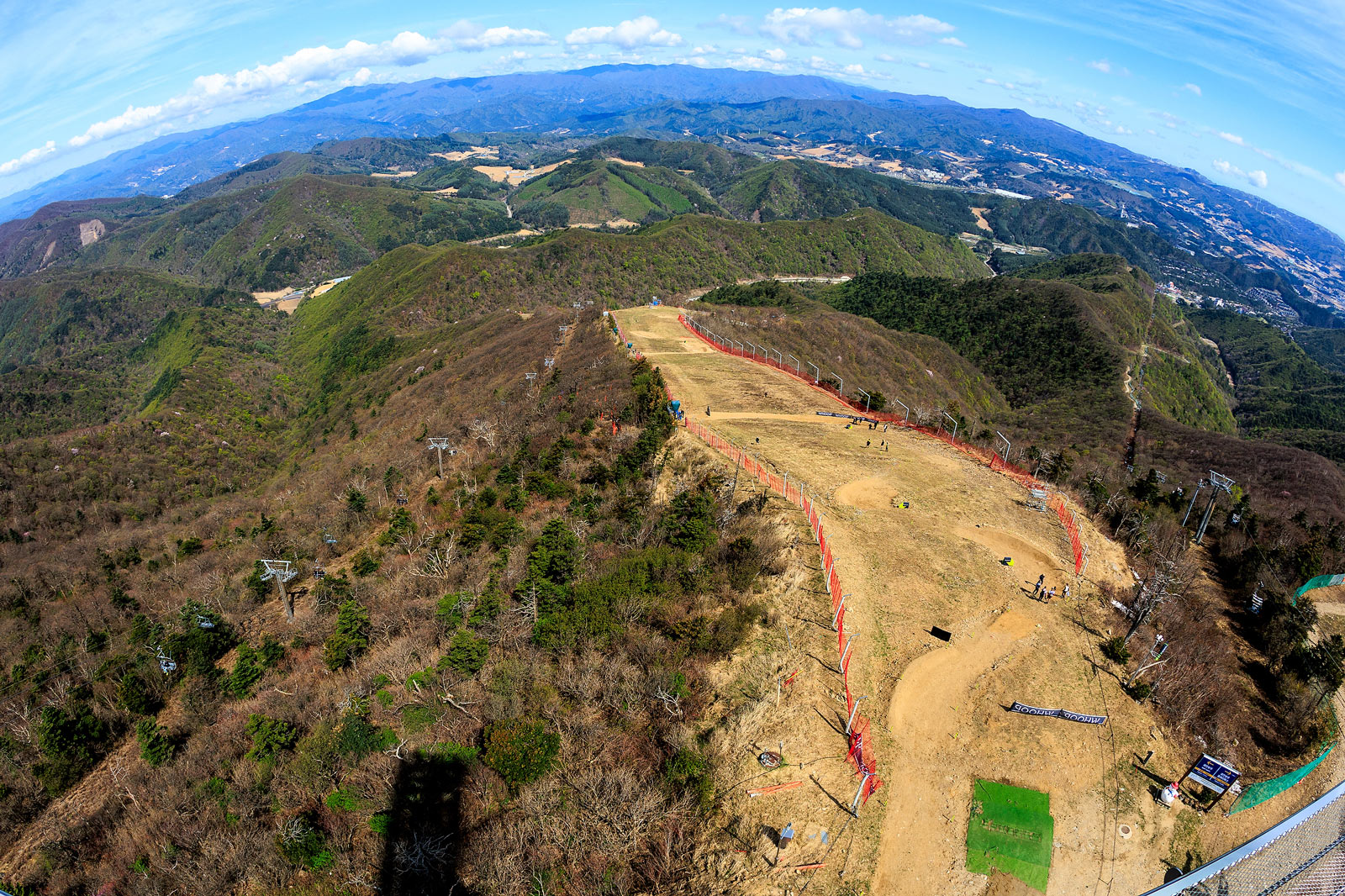
For me, the standout was Arai Mountain in Japan. The cultural experience alone was something special, but the amount of dedicated staff and the perfectionism that went into delivering those three events (1998, 2000 and 2001) was something I hadn’t seen to that point. Their budget was ample, mainly due to the cost of living in Japan at the time and the fact that their hundreds of volunteers needed to be paid volunteers, but they went the extra mile on everything.

Buses were sent to Tokyo airport to transport all international competitors and their gear to and from the venue, which was on the western side of Japan. They gave the teams a ‘travel grant’ for each top-50 rider they brought to the event, which really helped team budgets at the time. Oh, and the fans (in 1998 they had 110,000 over three days) were extremely knowledgeable about our sport, dedicated but very respectful. They would wait in line for hours for a Missy Giove autograph, but never hassle riders between the pits and the chairlift.
For the first event in 1998, the organiser was awarded the World Cup finals of DH and 4X, and it was a huge responsibility in their eyes. I was the UCI Technical Delegate that year and was treated to an incredibly well organised event; I couldn’t believe the presentation ceremony, it felt like a festival concert stage. The owner of the mountain and I would eventually put together my first team, Global Racing, and they were super passionate about competition.
Another stand-out event was Brazil. The South American fans of our sport are so deprived of live racing and I can’t wait for us to get back down there with a World Cup. Like the Japanese, the fans were incredibly knowledgeable and dedicated, climbing trees for vantage points at 7 am on the first day of training! While the venue, Camboriu Beach, wasn’t right next to a major metropolis, of which Brazil has many, it was impressive to see such a huge crowd, especially to cheer their local hero Markolf Berchtold as he took his maiden podium.
Our team at that point, G-Cross Honda, was fortunate enough to win the men’s DH both times we went down to Brazil, first with Greg Minnaar in 2005, then Matti Lehikoinen the year after, but every team that went had a blast. Winter in Brazil is pretty mild so the venue still had plenty of cool stuff for people to get up to after the race, from Sushi to Go-Karts, to Clubs that seemed to stay open all night. Some riders event went back for personal vacations after the season was over… it was that good.
Going to Stellenbosch and Pietermaritzburg (RSA), Cairns and Canberra (AUS), Wellington (NZL) were also important parts of the story, a story that aims to globalise the sport, and ideally discover new talent. In the 173 World Cup Downhill races that have been held only 14 have been held outside of Europe and North America, less than 10%. In fact, recent years have seen Europe have the lion’s share, with 108 (or more than 60% of the races)… which is odd when many of the teams’ sponsors are North American. So, why the huge European slant in the stats?
Sadly, it all comes down to money, and this is why we as teams are often fighting for rule changes that bring the series more financial strength. You need organisers who have the financial strength – and will – to put on these events, and in Europe as well as Québec, there are tourist boards that have healthy budgets targeted for special events that get their venue and/or region on TV.
You need an organiser, that’s the first thing. Then you need an organiser to have a venue the UCI will likely approve, and then they need to put together a bid that their host National Cycling Federation will officially endorse (and that’s not always easy as those bodies can get political, go figure!). In our discipline, there have been some years where there hasn’t been an abundance of these bids and the UCI has been forced to choose between holding fewer events or taking a risk on venues the teams/fans may not love.
I had a wry smile on my face leaving Lošinj (CRO) this year, after all the pre-event online vitriol about the venue ‘not being of the standard’, and then after the race seeing the venue universally acclaimed by teams, riders, sponsors and the UCI. Yes, some venues can be a risk, and some venues can get long in the tooth and a little boring, but it all comes down to who has the cojones to put a bid in and take on the financial risk of hosting. I organised two XC World Cups in the 90s and the budget concerns kept me awake for months.
The other factor as to why these ‘exotic’ venues outside of North America and Europe don’t feature as much is because they are much more difficult to attend for teams and riders. The cost of transportation, logistics, lack of on-site infrastructure and so on. We’re not Moto GP or F1 where our whole pit infrastructure can get transported and/or replicated as we travel around the world. That would be great, and a bigger series budget will help that in the future. The cost of TV production dramatically escalates as well, once we leave Europe. These are all large issues the UCI is constantly juggling.

Overall, the teams are happy with the direction we’re heading. 2019 will see us having one more race (eight races versus the seven of 2018), and the venues are generally well liked. We’d love to see more North American venues, and at least one or two exotics as the series hopefully expands to 10 races down the line. The only way that can happen, though, is if investors like Mercedes see continued growth in TV spectator numbers. For this reason, we must always be mindful of the TV product, what the fan is wanting to see, while remaining true to the basics of the sport… but that’s a whole different subject for another day.
At the time of writing Martin Whiteley was the Team Owner of the YT Mob and UCI Elite Gravity Team Representative.