


Words by Marcela Bonells
Photos by Sven Martin, Sebastian Schiek, Andrés Jaramillo Botero and Jorge Mario Jaramillo (Chigüiro)
Colourful ramshackle brick buildings with tin roofs sit tightly packed on top of each other like a giant honeycomb, clinging to the rugged slopes of Medellín’s western fringe – a vibrant quilt of concrete and greenery. The San Javier neighbourhood in the Comuna 13, with its polychrome graffitied walls, giant escalators, steep staircases and labyrinthine streets, was the perfect stage for the second stop of Red Bull Cerro Abajo 2023.
Once notorious for being one of the most dangerous districts in Medellín (formerly known as the ‘murder capital’ of the world), the Comuna 13 welcomed 28 world-class riders of ten nationalities earlier in the year for one of urban downhill’s most demanding events.
The tight 1.6 km concrete course packed with staircases, handrails and treacherous obstacles, passing through people’s roofs, was described by some riders as the gnarliest they’d raced to date – not the least because some features were built at the last minute. This meant there was no home advantage for local riders and no margin for error. Everyone was on a level playing field.

Twenty years ago, an international event of this sort would have been unfathomable in a place once ruled by drug cartels and gang violence. The transformation of this district – made up of 21 low- income neighbourhoods – has been nothing short of mind-blowing. A mix of government action and community initiative has seen the Comuna become a cultural hub, tourist attraction, and now an international stage for urban downhill racing. However, it remains plagued by socio-economic disparity.
Red Bull Cerro Abajo Medellín is not the first downhill event in the Comuna 13, and to get to that point required years of groundwork with authorities and locals. According to race organiser Jorge Mario Jaramillo (‘Chigüiro’), who has played a pivotal role in developing downhill and enduro in the country, they had to be escorted by an army battalion at the first race they organised there (over ten years ago). While that event was held in a different area of the Comuna, it paints a good picture of the incredible transformation that has taken place. That race and several successive events laid the foundation for Cerro Abajo.
“Chigüiro’s personal story and legacy in the Colombian mountain biking scene are a testament to the transformative power of bikes”
Chigüiro’s personal story and legacy in the Colombian mountain biking scene are a testament to the transformative power of bikes. Having lost his father to violence as a young boy and ready to take up arms to avenge him, he stumbled upon mountain biking, which, in his words, was a healing tool – an outlet for the rage, hatred and frustration he harboured. Bikes saved him.
It all started with a bike that he paid bit by bit to Manizales’ local legend and mechanic Hernando Gutierrez (‘Bisoño’). Chigüiro raced cross country and downhill with that bike. Eventually, he built a downhill bike with a broken frame. He went on to win national events, race internationally and wanted to share that knowledge and stoke for the sport with fellow riders in his hometown, Manizales. Back then, ‘there was a lot of talent but no races.’ So, he started organising local races with friends, which then turned into regional and national events.
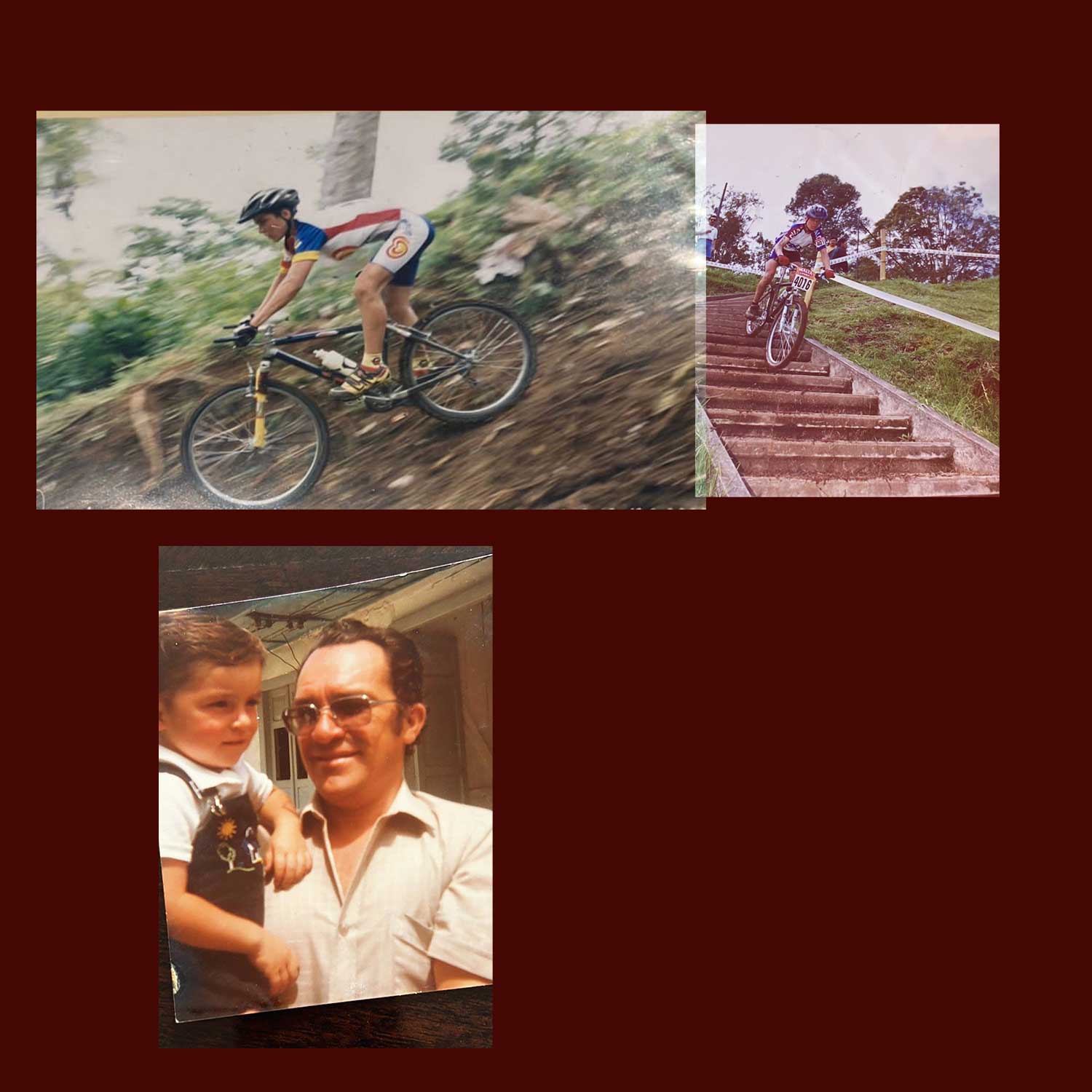
However, as the popularity of these races grew, organising them proved logistically difficult. With no uplifts or accessible mass public transportation, bringing people up the steep mountains in the region (racers, media and spectators) was virtually impossible. That’s when the idea of having urban downhill races came to the fore. Chigüiro had dabbed into urban downhill events and saw it as a way of bringing visibility to the sport while engaging local communities in marginalised areas – a win-win for everyone. In his words, ‘there was potential in the streets of Colombia to dynamise the sport.’
As urban downhill gained traction and races grew in popularity, the likes of Tomáš Slavík and Kyle Strait were participating in these events. Chigüiro went on to organise international races like Red Bull Cerro Abajo Monserrate in Bogota and a round of the Enduro World Series in Manizales – memorable for its urban prologue.
But getting to that point took years and a monumental effort to engage local communities, especially for urban downhill events in marginalised areas. Fostering a sense
of ownership for these races within those communities was vital to garnering people’s trust so that ‘they would see us as allies and not invaders’, says Chigüiro.

In Medellín, for example, he recalls going from having an army battalion at the first race in the Comuna 13 to having no security presence in the second edition a year later. One of the most challenging events he’s organised was in the Siloé district in Cali, recalls Chigüiro.
He explains that Siloé is a place of many complex socio-economic layers and acute poverty. It started as an informal settlement where many internally displaced people from different places sought refuge because of the armed conflict, and it has been ravaged by gang violence.
“organising a race in a place where gunshots may go off at any point was extremely difficult”
This place has invisible boundaries, which means that a gang crossing a street can give rise to armed confrontations because of territorial disputes. So, organising a race in a place where gunshots may go off at any point was extremely difficult, explains Chigüiro. The experience was filled with stark psychological contrasts and emotions.
On the one hand, there’s a harsh reality marked by violence and extreme poverty. He recalls building a wooden ramp when, out of nowhere, a guy with a mask came running towards him, holding a bottle and shouting that the police were coming. The guy, who was clearly strung out, asked him to fill the bottle with glue, which Chigüiro was using for the ramp.

Suddenly, he pointed a gun to his head and told him that one way or another, he was going to heaven that day. Ultimately, the guy took the glue bottle and left, and the race took place.
On the other hand, the generosity and warmth of people in such a hostile environment are overwhelming, and despite having little material possessions, ‘they want to share them with you,’ he says. The community’s reaction to the event was incredibly positive.
While it was a nerve-racking experience, it was well worth it for Chigüiro, who witnessed first-hand the power of bikes as a tool for change. The invisible boundaries in Siloé disappeared for a moment as the community came together to watch riders fly down sets of concrete staircases. The seed was planted, and a second edition was subsequently held.
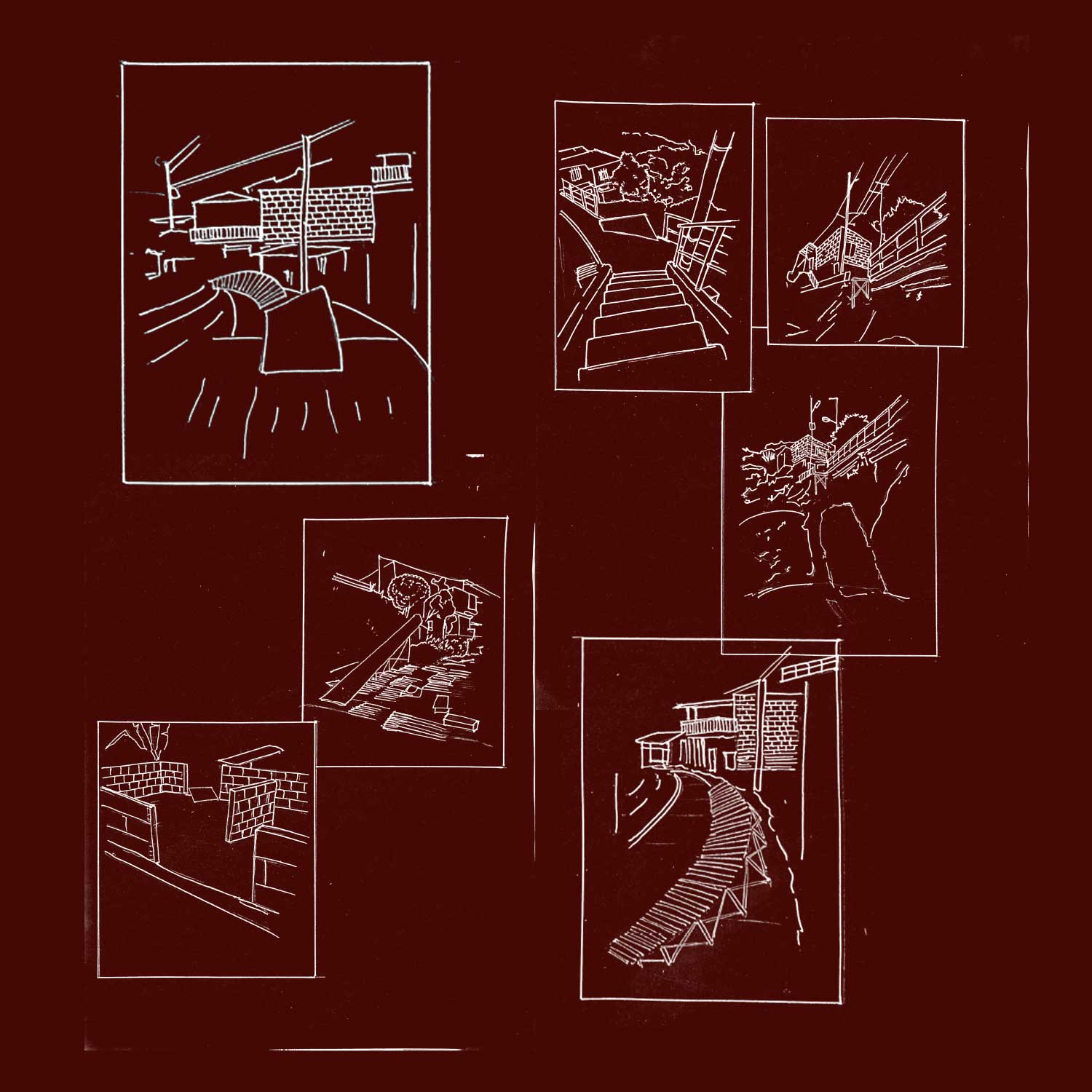
Beyond the competitive aspect of these races, they give people in these communities an opportunity to be part of something different, earn income and see other possibilities – away from crime – even if just for a moment. While in the grand scheme of things these events won’t significantly alter the realities of these communities, Chigüiro would like to make them more recurrent to have a lasting impact on people’s lives and livelihoods.
While Red Bull Cerro Abajo Medellín was a milestone for mountain biking in Colombia – not the least because local Juan Fernando Vélez took the victory – bringing international visibility to downhill in the country, it is but the tip of the iceberg of the work that Chigüiro and many other passionate people have been undertaking for years.
“For Chigüiro, bikes (whatever the type) are magic, and their power cannot be overstated”
For Chigüiro, bikes (whatever the type) are magic, and their power cannot be overstated. ‘No other sport has done for Colombia what cycling has done,’ breeding world-class riders in different disciplines like Nairo Quintana, Rigoberto Uran, Egan Bernal, Mariana Pajón and the Gutierrez brothers (Marcelo and Rafael) to name a few. And now, ‘what we are doing with downhill is inspiring millions of people in the country and pushing boundaries,’ he says.
The future of mountain biking is brighter than ever in Colombia, with a wave of young downhill riders, like Valentina Roa, Sebastian Holguín and Camilo ‘Paquito’ Sánchez, competing internationally – a breath of fresh air and hope in a country plagued by years of armed conflict.