


Words by Mario Presi (@trails.adventure) and Ash Smith (@stonekingrally)
Photos by Sven Martin (@svenmartinphoto), Sebastian Schieck and Boris Beyer (@maddogboris)
Enduro has world-class athletes, visits extraordinary places and looks like the mountain biking many of us do.
So why has professional enduro struggled to become a sustainable international sport?
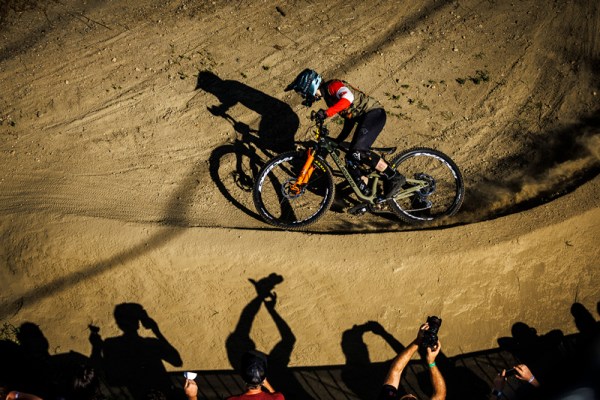
Stand at the bottom of an enduro stage in Finale, La Thuile or the Val di Fassa and the sport does not look short of value:
- The world’s fastest riders race trails that ordinary mountain bikers travel thousands of kilometres to ride.
- Bike companies sell products shaped by this riding.
- Destinations build reputations around the terrain.
- Photographers and filmmakers turn racing into images that travel far beyond the race itself.
- Amateur riders follow the athletes, buy the bikes, enter races and book holidays to ride the same places.
The trails are real, the athletes are extraordinary, the products are relevant, and the destinations are desirable. There is value everywhere.
Yet professional enduro has struggled lately, with vicious rumours culminating in the Enduro World Cup series folding.
There have been years of discussions about how enduro should be packaged, promoted, broadcast and professionalised.
More recently, as international enduro has become uncertain, the conversation has turned towards what should replace what came before.
How many races? How many stages? What format? Prize money? Broadcast? World Championships? Independent series?
All legitimate questions. But perhaps there is a more fundamental one underneath them: where does enduro’s value actually come from?
And once that value exists, who creates it, who captures it – and how much finds its way back?

THE SIMPLE STORY
The conventional story of professional sport is reassuringly straightforward:
Athlete performs. Performance creates story. Story attracts audience. Audience creates commercial value.
Sponsors want exposure, media wants content, manufacturers want customers, and promoters want participants and spectators.
It makes sense. It is also far too simple for enduro.
The athlete certainly creates value but doesn’t create the race alone.
Somebody found the terrain and negotiated access. Somebody designed, timed and marshalled the stages and provided medical cover. Teams paid to get riders there. Photographers and filmmakers turned moments on a hillside into something thousands could experience elsewhere. A destination supplied the landscape, infrastructure and identity that made it possible.
Volunteers gave up their weekends. Local communities absorbed the disruption. And underneath almost everything sits an asset mountain biking tends to take for granted: the trail.
Seen this way, enduro’s value isn’t produced at a single point and passed neatly along a chain. It emerges from a network of people, places, infrastructure and relationships.
Enduro probably doesn’t have a value-creation problem. It has a problem understanding who creates that value, who captures it and whether enough of it returns to keep the system healthy.
Value is created across the ecosystem, then transformed. A brutal stage means something immediate to the rider racing it; a photograph can make it mean something to 100,000 people elsewhere.
A race becomes a story, the story becomes attention, attention becomes aspiration – and aspiration can become participation, equipment sales, sponsorship value or tourism.
Eventually somebody captures some of that value. A bike company sells bikes. A destination sells hotel rooms. An organiser sells entries. A team secures sponsorship. A publication gains readers. Restaurants and guides gain customers.
There is nothing wrong with that. A healthy professional sport should create economic activity far beyond the finish line.
The more interesting question is what happens afterwards.
FOLLOW THE VALUE
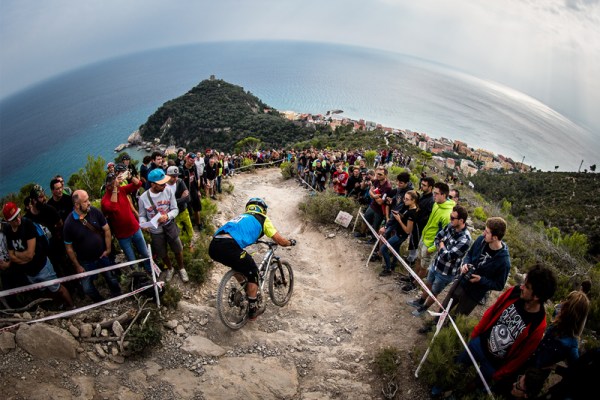
Imagine a major enduro race in Finale Ligure, one of the most famous enduro venues.
A rider arrives with a team. Accommodation is booked, mechanics need supplies and everybody needs feeding. Photographers arrive. Images of Mediterranean singletrack dropping towards the Ligurian Sea travel around the world.
Somebody in Manchester, Munich or Copenhagen sees those images and thinks: I need to ride there.
Six months later they arrive with three friends. They book accommodation, rent bikes, hire a guide, use an uplift and eat locally. Perhaps they return.
Which part of the original race created that value? The athlete? The trail? The photographer? The organiser? The destination? The bike company whose rider was in the photograph?
That is what makes enduro interesting as an economic system: the person capturing the value is not necessarily the person who originally created it.
Athletes need events. Events need trails. Trails need access. Organisers need destinations, and destinations benefit from participants. Brands need riders and riders need equipment. Media needs stories, sponsors need attention, and all need mountain biking to remain compelling.
Enduro isn’t simply a race series. It is a network of interdependencies.
And this is where things become complex and sometimes uncomfortable. A system struggles to remain sustainable when one part repeatedly carries the cost of creating value that is predominantly captured somewhere else.
EVERYONE GOES HOME. THE TRAIL DOESN’T
Football pitches wear out. Motorsport circuits require maintenance. Mature professional sports generally build maintenance of sporting infrastructure into the system that depends upon it.
For a race weekend, a trail becomes sporting infrastructure. Athletes perform on it. Photographers create images from it. Brands receive exposure. The organiser builds an event around it and the destination gains visibility.
The teams leave. The media leaves. The athletes leave. The spectators leave.
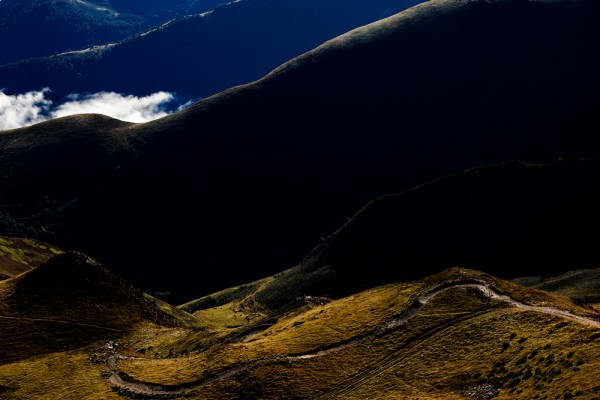
The trail doesn’t.
It still needs drainage and repair. Fallen trees still need clearing. Access and relationships with landowners still need maintaining. That work may fall to a local association, volunteers, a destination, private landowners or some combination of them.
Everyone can benefit from the trail while the race exists. But once the circus leaves town, somebody still has to look after what made it possible.
And trails are far from the only example. If privateers cannot afford to race, part of the sporting pyramid disappears. If organisers repeatedly lose money producing events, those events eventually disappear. If destinations cannot demonstrate a return, they stop contributing.
Which brings us to perhaps the most important word in this discussion: reinvestment.
EXTRACTION OR REGENERATION?
Reinvestment isn’t charity. It is maintenance of the production system.
If tomorrow’s enduro requires athletes, organisers, trails, access, destinations and functioning events, enough value generated today has to return to those foundations. Otherwise, we gradually consume the assets that create it.
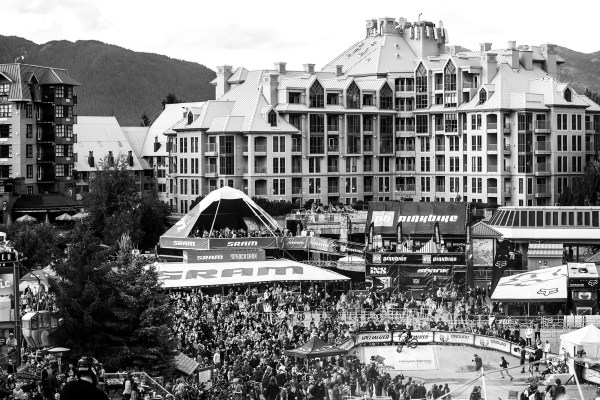
In an extractive model, sport creates attention, attention creates commercial value and much of that value eventually leaves the sporting ecosystem.
That can work for a while. But if the foundations are asked to produce more while receiving less, something gives. Fewer athletes can afford to compete. Events become harder to finance. Trails deteriorate. Destinations question their investment. Eventually the sport becomes less interesting – and its commercial value shrinks with it.
A regenerative model works differently. Sport creates attention and commercial value, but sufficient value travels back towards the people and assets required to create it again: athletes, events, trails, destinations, development, safety, access and storytelling.
Not as a handout, but because they are part of the machinery producing the value.
Value naturally flows towards whoever can monetise it. A sustainable sport needs enough of that value to flow back towards the people, places and infrastructure that allow enduro to happen again.
This isn’t an argument against commercialising enduro. Quite the opposite. Athletes need careers. Teams need sponsors. Organisers need viable businesses. Media needs paying. Destinations need returns. Brands need reasons to invest. Trail organisations need resources.
So the question isn’t whether money belongs in enduro. Of course it does. The question is whether the system recognises where the value generating that money originates.
Professionalisation is not necessarily the same thing as a healthy professional ecosystem.
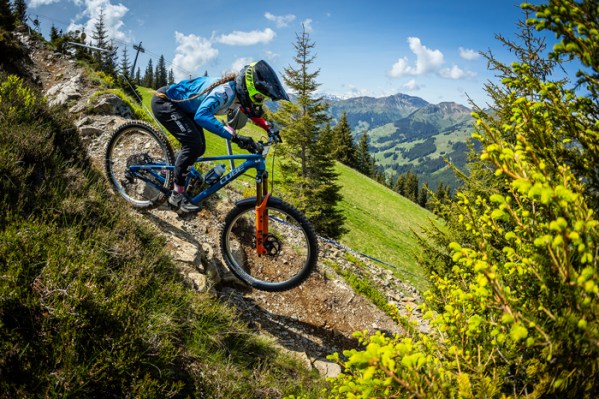
BEFORE WE REDESIGN ENDURO – MARIO AND ASH’S TAKE
This leads to what we think is the most useful way of looking at the sport: as three interconnected mechanisms.
The sporting engine – terrain, trails, access, athletes, teams and event production – creates competition.
The value engine – storytelling, media, audience, participation, commercial partnerships and destination exposure – transforms competition into attention and economic value.
The regenerative loop returns enough of that value to athletes, events, trails, destinations and development to allow the process to happen again.
Underneath all three sits governance: rules, integrity, safety, access, standards, accountability, transparency and the uncomfortable issue of value distribution.
International enduro is entering a period in which everybody wants to discuss what comes next. How many races? Which venues? What format? Who runs it? How is it broadcast?
If the economics don’t work for privateers, changing the number of stages won’t solve that. If organisers can’t finance great racing, another regulation won’t solve that. If destinations invest in hosting enduro but cannot identify a return, they stop paying. If trails generate value but receive insufficient reinvestment, they deteriorate. And if media cannot afford to tell the story, an audience will not materialise because there’s another championship.
Which brings us to a phrase used very easily in sport: athlete first.
What does that actually mean?
We don’t think we should answer that on behalf of professional athletes. So we’re asking them.
We’re beginning conversations with factory athletes, privateers, younger riders and people who have raced across different eras of enduro. Not to design their ideal championship, but to ask something more basic:
What does a professional enduro series need to provide for an athlete to race, progress and potentially build a viable career within it?
Then comes the organiser perspective. If athletes tell us what good enduro requires, what does delivering it entail? Course design, land access, medical provision, practice, timing, marshals, staffing, trail repair, insurance, media and money sit on the other side of the equation.
Then come teams, destinations, media, trail organisations and industry.
At that point, we’re no longer asking everybody for their favourite enduro format. We’re stress-testing a system.
It seems that one shouldn’t start by designing another championship, but by understanding what athletes need, what organisers can deliver and what the rest of the ecosystem requires to support them.
Then design the sport.

THIS ISN’T THE ANSWER
This isn’t meant to be a blueprint for whoever controls international enduro next, nor an accusation that one organisation captured too much value or another contributed too little.
It’s the suggestion of a working model – a starting point for discussion.
Perhaps some relationships are missing. Perhaps an athlete, organiser, trail builder and team manager will see four different problems in the same system.
One risk facing enduro now would be replacing one top-down answer with another. There is an opportunity to do something more useful: listen first.
Understand what athletes need. Map organisers’ constraints. Understand what destinations require in return for investment, what makes commercial involvement worthwhile, what allows media to tell compelling stories – and what keeps the trails underneath our tyres.
Then design the system.
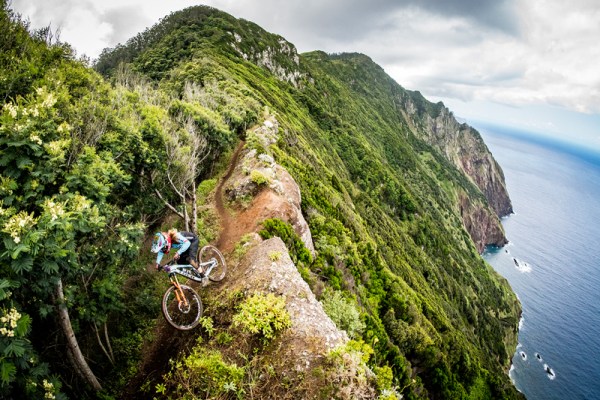
SO, WHERE DOES ENDURO’S VALUE COME FROM?
The more we look at it, the more the answer appears to be: everywhere.
It comes from the rider risking everything between the tape and the person digging drainage on Tuesday afternoon. From the organiser negotiating access and the photographer lying in the mud. From the mechanic keeping a race bike alive, the volunteer holding a radio, the destination providing the mountain, the company paying a rider’s salary and the amateur watching at home who decides to race next year.
Perhaps enduro’s problem has never been an inability to create value. Perhaps we simply haven’t been very good at seeing the complete system creating it.
And if international enduro is going to rebuild itself, that seems like a reasonable place to start.
Not by asking how much more value can be extracted from the sport, but by asking: What needs to remain healthy for enduro to keep creating value at all?
Because reinvestment isn’t charity.
It’s the fuel for whatever comes next.
ABOUT THE AUTHORS
Mario Presi is a professional mountain bike guide based in Finale Ligure, Italy, where he works across guiding, trail advocacy, destination development and the wider MTB industry. Through Trails Adventure, he works with riders, teams and brands while remaining closely involved with the trails and local organisations that underpin Finale’s mountain bike economy.
Ash Smith is a trail advocate living in France and usually located on a stretch of singletrack somewhere, often in a Misspent Summers beanie. Smith founded the Stone King Rally multi-day enduro race and now offers Club Weeks that follow the route he and his team created. Before that, he founded Trans-Provence, the ‘Original Alpine MTB Rally’.